Ingredients
Method
Prepare the Batter
- Drain the soaked rice and grind it first until it reaches a slightly coarse texture. Add the soaked urad dal, fenugreek seeds, and salt.
- Grind together, adding water sparingly.
Consistency Secret: Aim for a thick, smooth pouring consistency. If it's too runny, the paniyarams won't puff up!
Fermentation
- Transfer the batter to a large bowl and let it ferment in a warm place for at least 8 hours or overnight.
- This is where the "spongy" heart of the paniyaram is created.
Tempering
- Heat oil in a pan. Add mustard seeds, cumin, urad dal, and chana dal.
- Once they splatter and turn golden, add the ginger, green chilies, onions, and curry leaves.
- Sauté until the onions are translucent. Stir in the freshly grated coconut at the very end and turn off the heat.
- Allow the tempering mixture to cool slightly, then mix it gently into the fermented batter along with the fresh coriander leaves.
Cooking
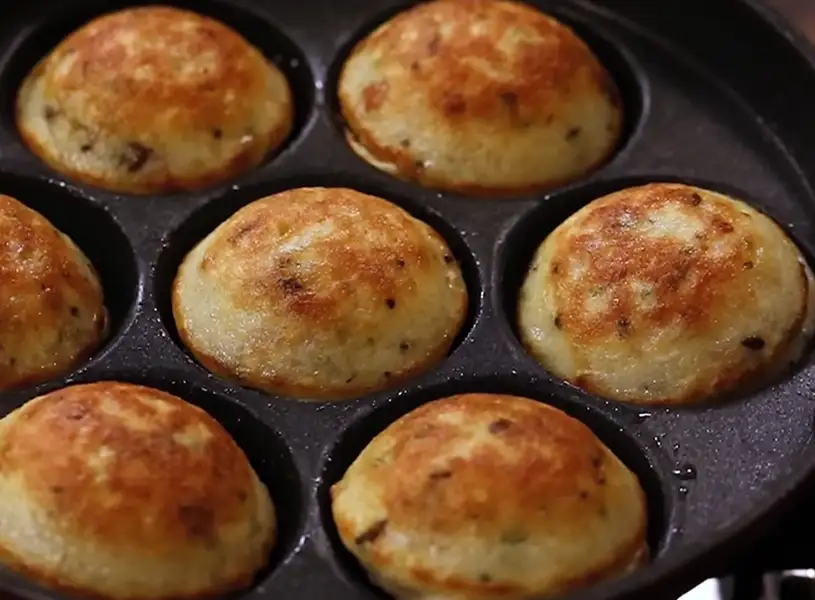
- Heat a Paniyaram Skillet (Appakarai) over a medium flame. Add a small drop of oil into each mold.
- Pour the batter until each mold is 3/4 full—this gives them the "room" they need to rise and become spherical.
- Cook on medium heat to ensure the centers are fully set.
- Once the bottom turns a rich golden brown, use a skewer or fork to gently flip them over. Cook the other side for another 2-3 minutes until equally crispy.
Notes
Pro Tip: Use Gingelly (Sesame) oil for the authentic nutty aroma typical of Chettinad cuisine.
Storage: You can store the plain fermented batter for 2-3 days in the fridge. Only add the tempering just before you are ready to cook.
Serving Suggestion: Best enjoyed hot with spicy tomato chutney or coconut chutney.