The Science Behind Fluffy, Sticky, Creamy, and Firm Grains
Why does basmati rice cook up light and separate, while sushi rice clings together? Why does risotto become creamy without adding cream, and why can sticky rice stretch almost like dough?
The answer lies in starch chemistry, grain structure, processing, and cooking technique. Although rice appears simple, its texture is determined by a complex interaction between molecular composition and heat. Understanding these factors gives you control over the final result in your kitchen.
Role of Amylose and Amylopectin
All rice is primarily composed of starch, and starch itself consists of two major glucose-based molecules: amylose and amylopectin. The balance between these two determines how rice behaves once heat and water are applied.
Rice that is high in amylose, such as basmati and many long-grain varieties, cooks into grains that remain distinct and separate. The linear structure of amylose allows the molecules to pack tightly together, limiting excessive swelling and stickiness. As a result, the texture feels firm, dry, and fluffy rather than moist or clumped.
In contrast, rice that is high in amylopectin, such as Japanese short-grain rice and glutinous (sticky) rice, develops a cohesive and gel-like structure when cooked. The branched structure of amylopectin traps water efficiently and creates a sticky network. This is why such rice clings together easily and can be shaped or picked up with chopsticks.
Between these extremes are medium-amylose varieties like jasmine rice. These cook into grains that are tender and slightly clingy without becoming glue-like. This balanced starch composition makes them versatile, especially for dishes where rice needs to absorb sauces while maintaining some structure.
Grain Shape Influences Texture
Texture differences are not only about chemistry; physical structure also plays an important role. The shape and size of the grain affect how water penetrates and how starch gelatinizes.
Long-grain rice, which is slender and elongated, typically contains higher amylose levels. When cooked, the grains expand lengthwise and remain separate, resulting in a light, airy texture.
Medium-grain rice is shorter and slightly plumper. It tends to be more tender and moderately sticky, offering a softer bite while still holding some definition.
Short-grain rice is rounder and more compact. Its higher amylopectin content and compact structure contribute to a sticky, cohesive texture that holds together naturally after cooking.
In general, the shorter and wider the grain, the more likely it is to feel sticky and moist.
The Role of Gelatinization
When rice cooks, it undergoes starch gelatinization, the transformation that defines its final texture.
As heat and water penetrate the grain, the starch granules absorb moisture and swell. The internal crystalline structure loosens, and amylose and amylopectin disperse into a gel-like network.
In high-amylose rice, this network becomes structured and firm, limiting excessive stickiness. In high-amylopectin rice, the network is more cohesive and elastic, producing the familiar sticky texture.
The degree of gelatinization—how completely the starch granules swell and rupture—strongly influences whether rice feels firm, creamy, or soft.
Read article: Starch Gelatinization Explained
Water Ratio and Cooking Method
Even the same rice variety can yield different textures depending on how it is cooked. The amount of water and the method of heat application significantly influence starch behavior.
When rice is cooked using the absorption method, where a measured amount of water is fully absorbed, the grains remain defined and structured. This technique is ideal for long-grain rice intended to be fluffy and separate.
When rice is boiled in excess water and then drained, surface starch is reduced, and the grains often become lighter and less sticky.
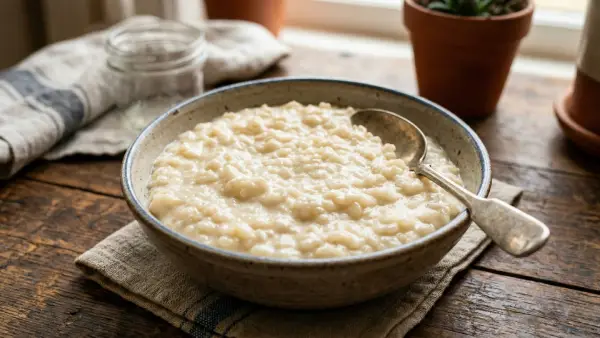
In contrast, when rice is cooked with frequent stirring—such as in risotto—starch is actively released into the surrounding liquid. This creates a creamy suspension, even without added dairy. Medium-grain varieties high in amylopectin are best suited to this method because they release starch gradually.
Thus, technique can either enhance or reduce a rice variety’s natural stickiness.
Milling and Processing
How rice is processed after harvest also affects texture.
White rice has had its bran and germ layers removed. Without the fibrous outer layer, water penetrates easily, allowing for quicker cooking and softer texture. The gelatinization process is more uniform and predictable.
Brown rice retains its bran layer, which acts as a protective barrier. This slows water absorption and requires longer cooking times. The result is a firmer, chewier texture and a slightly denser mouthfeel.
The bran layer not only influences texture but also contributes additional nutrients and subtle nutty flavor.
Cooling and Retrogradation
Texture changes continue even after rice has finished cooking. As rice cools, starch molecules begin to realign in a process known as retrogradation.
Amylose chains reorganize first, pushing water out of the gel network and causing the grains to firm up. Over time, amylopectin also contributes to increased rigidity.
This explains why refrigerated rice feels dry or stiff compared to freshly cooked rice, even if the total moisture content has not significantly changed. Interestingly, this firmer texture is beneficial for fried rice, where separate grains are preferred.
Related article: Retrogradation: Why Bread Goes Stale
Variety and Genetics
Different rice varieties have been selectively bred for specific textural qualities over centuries.
Basmati rice has been cultivated for elongation and grain separation. Sushi rice has been developed for cohesion and glossiness. Sticky rice has been optimized for elasticity. Arborio rice, commonly used in risotto, has a structure that allows gradual starch release, creating creaminess while maintaining a firm core.
These genetic differences influence starch composition, grain structure, and cooking performance.
Cultural Preferences Shape Texture
Texture preferences are deeply cultural. In many South Asian and Middle Eastern cuisines, separate grains are a mark of culinary skill and refinement. In Japan and Korea, stickiness is valued because it supports chopstick use and communal dishes. In Southeast Asia, elastic sticky rice is integral to hand-eaten meals and shared dining traditions.
Over generations, these preferences guided agricultural selection and cooking techniques, reinforcing regional identity through texture.
Why Some Rice Feels Creamy
Creaminess in dishes such as risotto or congee occurs when starch is intentionally released into the cooking liquid. Continuous stirring, extended hydration, and partial breakdown of starch granules create a thick suspension. The creamy sensation is produced by dispersed starch molecules rather than fat.
This illustrates how texture can shift dramatically based on method, even when using the same fundamental ingredient.
Why Rice Sometimes Turns Mushy
Rice becomes mushy when its structural integrity is compromised. Excess water, prolonged cooking, or vigorous stirring can cause over-gelatinization, where starch granules break down completely. Low-amylose varieties are especially prone to this if not carefully monitored.
When too much starch is released and the internal framework collapses, the result is a soft, pasty consistency rather than defined grains.
Conclusion
Rice textures differ because of variations in starch composition, grain shape, cooking method, processing, cooling behavior, and genetic selection. What appears to be a simple staple is actually a finely tuned starch system shaped by both chemistry and culture.
By understanding these factors, you can intentionally choose whether your rice turns out fluffy, sticky, creamy, or firm. Texture is not accidental—it is the predictable result of molecular design and culinary technique working together.
Related articles: