Rice pudding looks like a simple trick: just rice, milk, and sugar. But the real magic is happening inside the rice itself. Unlike other desserts that need flour or cornstarch to get thick, rice pudding is a “self-thickener”. It uses its own internal starch to turn plain milk into a rich, velvety custard.
Understanding how this works is the key to making a pudding that is perfectly creamy rather than sticky or thin.
The Anatomy of a Grain: Amylose vs. Amylopectin
Inside every grain of rice are tiny bundles of starch. These bundles are made of two different types of molecules that act like the “personality” of the rice:
- Amylose (The Structure): Long, straight strings that help the rice stay firm and keep its shape.
- Amylopectin (The Creaminess): Busy, branched strings that love to get sticky and create a thick, gooey texture.
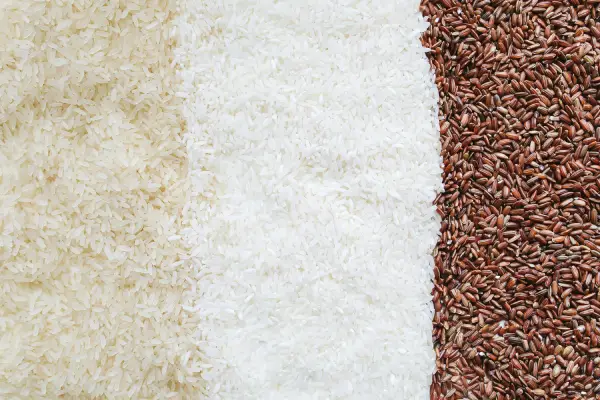
Short-grain rice (like Arborio or Sushi rice) has more of the “sticky” amylopectin, which is why it’s the best choice for a creamy pudding. Long-grain rice (like Basmati) has more of the “firm” amylose, which is why it usually stays separate and doesn’t thicken the milk as well.
How the Creaminess Happens
Making rice pudding is basically a slow-motion version of the “starch burst”.
Step 1: Drinking Up
As the rice sits in the warm milk, the liquid slowly moves into the hard grain. The starch bundles inside start to drink up the milk and grow larger. At this point, the pot still looks very watery.
Step 2: The Soft Release
As the heat rises to the “gelatinization range”—about 68–78°C (154–172°F)—the starch bundles inside the grain get so full that they start to “leak” their sticky strings out into the milk. The milk thickens because these escaped strings get tangled together, creating a soft, invisible web.
Step 3: The Gentle Stir
Stirring is your most important tool. Moving the rice around gently helps it release that surface starch into the milk.
Pro Tip: Be careful with your spoon! Excessive or aggressive stirring can break the swollen grains too much, turning your creamy pudding into a pasty, gluey mess.
Role of Milk, Fat, and Sugar
Rice pudding isn’t just about the grain; the other ingredients change how the starch behaves.
- Milk Proteins: Casein and whey provide body and richness, though they don’t thicken the liquid the way starch does.
- Fat: Butter or whole milk coats the starch strings, making everything feel smooth and silky on your tongue.
- Sugar: Sugar is a “water hog”. If you add it too early, it steals the moisture away from the rice, which can stop it from thickening properly.
Pro Tip: For a thicker, more luscious result, cook your rice in the milk until it is nearly soft before adding the sugar. This ensures the starch granules have full access to the liquid they need to burst and thicken the pot.
Why Cooling Changes Everything
Have you ever noticed that warm rice pudding is runny, but cold pudding is thick enough to hold a spoon upright? That’s due to Retrogradation.
As the pudding cools, those tangled starch strings in the milk get stiff and line up into a solid structure. Reheating it “melts” those strings back into a liquid state, making it creamy again.
Troubleshooting Your Texture
If your pudding isn’t quite right, science usually has the answer:
- If it’s too thin: You probably didn’t cook it long enough for the starch to “leak” out, or you added the sugar too early. Continue gentle cooking to release more starch.
- If it’s too sticky or gluey: You might have stirred it too much or used a rice with extremely high amylopectin. Next time, stir less; for now, stir in a little warm milk to loosen it up.
- If it feels crunchy or grainy: Your rice is likely undercooked because the heat was too high or it didn’t simmer long enough for the granules to burst. Cook it longer at a very gentle heat.
Pro Tip: If your chilled pudding has become too firm to enjoy, whisk in a tablespoon of room-temperature heavy cream or milk just before serving to “reset” the creamy mouthfeel without needing to reheat the whole batch.
Creaminess in rice pudding is not an accident—it is a result of managing a biological “solid foam”. By choosing a “sticky” rice and managing the heat, you’re basically letting the rice build its own sauce.
Related article: How Carbohydrates Actually Build the Food We Love