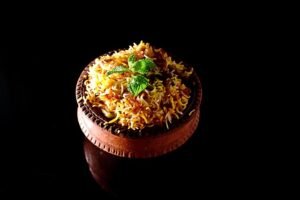
This culinary demonstration showcases the meticulous process of creating a flavorful and authentic Vegetable Biryani. Unlike quick one-pot meals, this recipe focuses on the “dum” style of cooking, where parboiled rice and a rich vegetable masala are layered and slow-cooked to perfection, ensuring each grain of rice is separate yet infused with aromatic spices.
Ingredients and Measurements
For the Rice:
- Basmati Rice: 500g (soaked for at least 30 minutes)
- Water: For boiling
- Whole Spices: Cinnamon, cloves, and cardamom
- Salt: To taste
For the Vegetable Masala:
- Oil/Ghee: 2 tbsp Olive oil and a generous amount of Ghee
- Whole Spices: 5-6 Cloves, 4-5 Green Cardamoms, and 2-3 pieces of Cinnamon
- Onions: 4-5 large onions, thinly sliced (for the base and for fried onions)
- Ginger-Garlic Paste: 3 tsp
- Tomatoes: 2 large, sliced
- Vegetables: A mix of cauliflower florets, green peas, carrots, and potatoes (roughly 1 cup each)
- Green Chilies: 3-4, slit
- Curd (Yogurt): 1/2 cup
Spice Powders:
- Kashmiri Red Chili Powder: 2 tsp
- Coriander Powder: 3 tsp
- Cumin Powder: 1 tsp
- Garam Masala/Biryani Masala: 1.5 – 2 tbsp
For Layering & Garnish:
- Fresh Mint & Coriander Leaves: Handful, chopped
- Fried Onions (Barista): For topping
- Saffron Milk or Food Color: Optional, for aesthetics
Preparation Method
1. Preparing the Vegetable Base
The process begins by tempering whole spices in a mix of oil and ghee. The onions are sautéed until they reach a deep golden brown color, which is crucial for the biryani’s signature depth of flavor. Ginger-garlic paste is added and cooked until the raw aroma disappears, followed by tomatoes and green chilies.
Once the tomatoes soften, the spice powders (chili, coriander, cumin) are incorporated. The vegetables are then added along with curd, which acts as a tenderizer and provides a creamy tang to the masala. This mixture is cooked until the vegetables are nearly done but still retain a slight bite.
2. Cooking the Rice
While the vegetables simmer, the soaked Basmati rice is cooked in a large pot of salted water infused with whole spices. It is emphasized cooking the rice only until it is 70-80% done. This ensures that the rice finishes cooking during the “dum” process without becoming mushy. The rice is then strained thoroughly.
3. The Layering (Dum) Process
In a heavy-bottomed pot, a layer of the prepared vegetable masala is spread at the bottom. This is followed by a layer of the parboiled rice. Fresh mint, coriander, fried onions, and a sprinkle of garam masala are added between layers to build a complex aroma. A final drizzle of ghee and saffron milk is added over the top layer of rice.
4. The Final Touch
The pot is sealed tightly to trap the steam. It is cooked on a very low flame (Dum) for about 15 minutes. This slow-cooking method allows the flavors of the masala to penetrate the rice grains. Once finished, the biryani is gently fluffed from the sides to keep the long grains intact.
Conclusion
The result is a vibrant, aromatic, and restaurant-quality Vegetable Biryani. The secret to a great biryani lies in the patience of caramelizing onions and the precision of timing the rice. Serve hot with a side of cool onion raita for the perfect meal.