The Cultural and Scientific Heart of a Continent’s Staple
Across Asia, rice is far more than a side dish. It is language, livelihood, ritual, and daily sustenance woven into identity itself. In many Asian cultures, the word for “rice” is synonymous with “food.” From delicate jasmine rice in Thailand to hand-pounded mochi in Japan, rice traditions reflect geography, climate, religion, and agricultural innovation.
Understanding these traditions also reveals something deeper: how starch science, cultivation methods, and cooking techniques shape cultural foodways.
Rice as Identity
Asia produces and consumes roughly 90% of the world’s rice, yet the grain varies dramatically by region. Thousands of varieties exist, each shaped by local climate, water availability, soil conditions, and centuries of selective cultivation.
Rice traditions developed in response to environmental factors such as monsoon rainfall patterns, river delta irrigation systems, and terraced mountain farming. Over time, these agricultural realities intertwined with religious ceremonies, harvest festivals, and social customs. Texture preferences—whether fluffy and separate or sticky and cohesive—are deeply connected to starch composition and cooking tools like chopsticks, hands, or spoons.
At the molecular level, the balance between amylose and amylopectin determines whether rice cooks up firm, creamy, or elastic. At the cultural level, that texture becomes tradition.
Related article: How Carbohydrates Actually Build the Food We Love
East Asia: Stickiness, Precision, and Ritual
Japan
In Japan, short-grain rice rich in amylopectin is favored for its natural stickiness and glossy finish. This cohesive texture allows rice to clump gently, making it ideal for sushi and onigiri while still maintaining a delicate chew.
Rice cultivation has deep spiritual roots in Japan. Shinto rituals honor planting and harvest seasons, and offerings of rice and sake symbolize gratitude and continuity. The preparation of rice itself reflects precision: careful rinsing removes excess surface starch, and controlled water ratios ensure consistent gelatinization and texture.
Rice in Japan is not merely a staple—it is ceremonial and cultural heritage.
Related article: Starch Gelatinization Explained
China
China’s vast geography produces diverse rice traditions. Northern regions often favor firmer, less sticky varieties, while southern provinces prefer softer, more cohesive rice.
Daily meals typically center around a bowl of steamed rice, accompanied by vegetables and proteins. Congee transforms rice into a comforting porridge through extended hydration and starch breakdown. Fried rice intentionally uses cooled rice, where slight starch retrogradation helps grains remain separate during stir-frying.
Rice cultivation has shaped Chinese history, economics, and settlement patterns for thousands of years, anchoring both rural life and imperial development.
Southeast Asia: Fragrance and Glutinous Traditions
Thailand
Thai jasmine rice is prized for its floral aroma and tender texture. Containing moderate levels of amylose, it produces grains that are soft yet distinct, absorbing curries and sauces without collapsing.
Rice is central to both everyday meals and ceremonial offerings in Thailand. Its fragrant quality and gentle structure reflect regional climate conditions and culinary preferences that emphasize balance and harmony.
Laos and Northern Thailand
In Laos and parts of Northern Thailand, glutinous (sticky) rice dominates daily life. This variety is extremely high in amylopectin, which creates a stretchy, cohesive texture once steamed.
Sticky rice is traditionally prepared in woven bamboo baskets and eaten by hand. Diners roll it into small portions to scoop up savory dishes, making texture integral to communal dining practices. The elasticity of the grain is not accidental—it is culturally preferred and agriculturally sustained.
Vietnam
Vietnamese cuisine showcases rice in multiple forms beyond simple steamed grains. Rice is transformed into delicate noodles for pho, thin wrappers for fresh spring rolls, and fermented products that expand flavor complexity.
Terraced rice paddies across Vietnam’s landscapes illustrate the deep agricultural roots of this staple. Each transformation—from noodle to paper—relies on controlled starch gelatinization and drying processes that create entirely new textures from the same grain.
South Asia: Aromatics and Layered Rice Dishes
India and Pakistan
Basmati rice, grown in the foothills of the Himalayas, is celebrated for its long grains and high amylose content. During cooking, the grains elongate and remain separate, producing the fluffy structure essential for dishes like biryani and pulao.
Rice also plays symbolic roles in weddings, religious ceremonies, and festivals. Throwing rice signifies prosperity and blessing, reflecting the grain’s deep spiritual resonance.
Sri Lanka
In Sri Lanka, rice is served alongside multiple curries and vegetable dishes, forming the structural foundation of the meal. Traditional red and heirloom rice varieties retain their bran layers, contributing nuttier flavors and firmer textures.
Rice here functions as a balancing agent, absorbing spices and sauces while maintaining enough integrity to anchor complex flavor combinations.
Korea: Rice as Daily Foundation
In Korea, rice (bap) forms the core of nearly every meal. Short- or medium-grain varieties provide a slightly sticky texture that supports communal dining and shared dishes.
Rice appears in bibimbap, where it anchors vegetables and proteins; in tteok, where sticky rice is pounded into chewy cakes; and even as nurungji, the crisp, caramelized crust formed at the bottom of the pot. Each preparation highlights different aspects of starch transformation, from gelatinization to controlled browning.
Modern rice cookers reflect how deeply rice preparation is embedded in everyday Korean life.
Rice and Religion
Across Asia, rice carries symbolic meaning tied to fertility, abundance, and gratitude. In Hindu rituals, rice is offered during prayers and ceremonies. In Buddhist traditions, rice donations support monastic communities. In Japan, imperial rites historically center on rice cultivation as a sacred duty.
Harvest festivals throughout Asia celebrate planting and gathering cycles, reinforcing rice as both nourishment and spiritual connector.
Texture Preferences Across Regions
Regional texture preferences reflect both molecular science and cultural practice. High-amylose varieties like basmati yield fluffy, separate grains ideal for layered dishes. High-amylopectin varieties like sticky rice create elasticity suited for hand-eaten meals. Balanced varieties such as jasmine rice provide softness with gentle separation.
These differences arise from starch composition but endure because they align with tools, climate, and tradition.
Cooking Methods Reflect Culture
Traditional cooking techniques reinforce rice identity across Asia. Bamboo steaming preserves stickiness without excess water. Clay pot cooking encourages crust formation and layered textures. Extended simmering transforms grains into porridge. Modern electric rice cookers standardize hydration and temperature control for consistent results.
Each method manipulates water absorption and heat distribution, shaping the final mouthfeel.
Beyond the Plate: Rice as Landscape and Economy
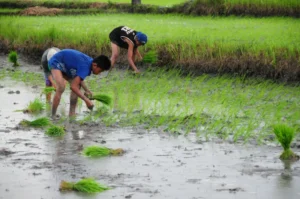
Rice paddies sculpt landscapes across Asia, from terraced mountainsides to expansive river deltas. These agricultural systems require intricate water management and coordinated community labor.
Rice cultivation influences settlement patterns, trade networks, and regional economies. Entire societies evolved around planting and harvest cycles, embedding rice deeply into cultural identity.
Conclusion
Rice traditions across Asia reveal how a single grain can define civilizations. Agricultural adaptation, starch chemistry, cooking techniques, and spiritual symbolism converge in daily meals.
From elastic sticky rice eaten by hand in Laos to aromatic basmati layered in biryani, rice reflects both scientific structure and cultural continuity. It is not merely a carbohydrate—it is history served warm in a bowl.
Related article: Whole Grains vs Refined Grains