In baking, sugar is often treated as a flavoring ingredient. But from a structural standpoint, sugar is one of the most powerful architectural components in a formula. It regulates water distribution, interferes with protein bonding, delays starch setting, stabilizes air bubbles, enhances browning reactions, and controls moisture migration even days after baking.
Understanding sugar at the molecular level allows you to intentionally manipulate tenderness, chewiness, rise, crust formation, and shelf life. Sugar does not simply sweeten — it reshapes the internal framework of baked goods.
Sugar and Gluten: Controlling Strength and Tenderness
In wheat-based systems, structure begins with gluten formation. When flour hydrates, glutenin and gliadin proteins bond to create an elastic network capable of trapping gas. (See: Flour Types Explained.)
Water Competition
Sugar is hygroscopic, meaning it actively binds water molecules. When added to a dough or batter, sugar competes with flour proteins for hydration. Because gluten formation depends on sufficient water availability, sugar effectively limits the strength of the developing gluten network.
- When gluten is partially restricted, the resulting crumb becomes softer and more tender rather than elastic and chewy.
- In cakes, this weakened gluten structure prevents toughness and allows a delicate crumb to form.
- In cookies, limited gluten development contributes to spread and a less bread-like texture.
- In lean breads with very little sugar, gluten develops fully, creating chewiness and structure.
The more sugar present, the more gluten formation is moderated. This is one of the primary reasons cakes differ structurally from bread.
Sugar and Starch: Delaying Gelatinization
Starch gelatinization occurs when starch granules absorb water and swell as temperature rises, forming a semi-rigid network that sets the crumb structure. (See: Starch Gelatinization Explained.)
Boiling Point Elevation and Water Binding
When sugar dissolves into the liquid portion of a batter, it raises the boiling point of water and binds some of it. This has several structural consequences:
- Starch granules must reach a higher temperature before they can fully gelatinize.
- The batter remains fluid for a longer period during baking.
- Gas bubbles from leavening have more time to expand before the structure sets.
This delayed setting is critical in cakes. It allows full expansion before the crumb solidifies, producing a lighter, more uniform interior. Without sufficient sugar, cakes may set too quickly, limiting rise and producing dense texture.
In custards and pie fillings, high sugar concentration prevents starch from thickening too aggressively, maintaining smoothness rather than gumminess.
Sugar and Eggs: Stabilizing Foam Systems
In foam-based products such as sponge cakes, chiffon cakes, and meringues, air incorporation is central to structure.
Foam Stabilization
When sugar is added to whipped eggs:
- It dissolves into the liquid phase of the foam.
- It increases the viscosity of the mixture.
- It slows protein coagulation under heat.
These effects stabilize the delicate air cells trapped during whipping. Sugar strengthens the liquid walls surrounding air bubbles, making them less likely to burst before baking sets the structure.
If too little sugar is used, foam collapses easily because the protein network tightens too rapidly.
If too much sugar is used, the foam becomes heavy and may struggle to expand properly.
Sugar therefore regulates both expansion and stability in aerated systems.
Sugar and Fats: The Creaming Effect
In butter cakes and many cookies, sugar contributes mechanically during mixing — not just chemically during baking.
Mechanical Aeration
When granulated sugar is beaten with solid fat:
- Sharp sugar crystals physically cut into the fat.
- Tiny air pockets form within the fat matrix.
- These pockets act as expansion sites in the oven.
As the oven heat melts the fat and activates leavening, those trapped air cells expand, contributing to rise and crumb structure.
The size of the sugar crystals influences the final texture:
- Fine sugar produces smaller air pockets, resulting in a tighter, finer crumb.
- Coarser sugar creates larger pockets, leading to a more open and sometimes irregular texture.
Without sugar, the creaming process would not generate the same level of aeration, dramatically changing cake structure.
Sugar and Browning: Creating Surface Structure
Sugar is essential to the development of crust and exterior texture.
Caramelization
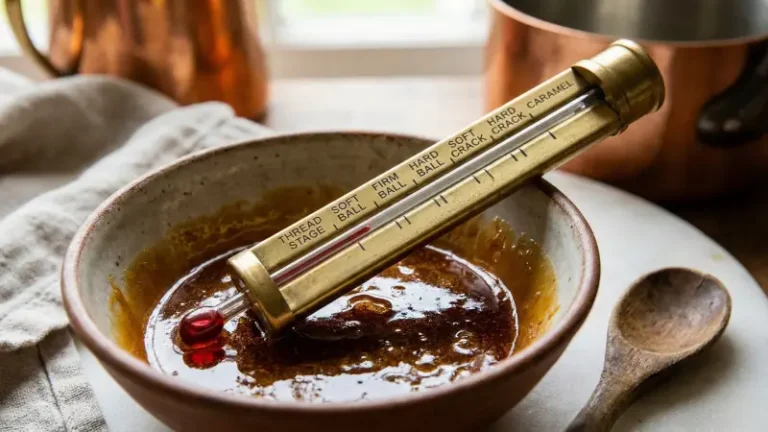
When sugar is exposed to high heat, it breaks down and reforms into complex flavor and color compounds. This process creates rigid, glass-like structures that contribute to crispness.
In cookies, caramelization forms golden edges and crisp surfaces.
Maillard Reaction
Reducing sugars react with amino acids from proteins to create browning and flavor compounds. This reaction strengthens crust structure by forming new molecular bonds on the surface.
(See: Natural Sweeteners Compared for differences among sugars.)
Without sugar:
- Breads remain pale.
- Cookies lack crisp edges.
- Pastries lack structural contrast between crust and interior.
Sugar enhances not only flavor complexity but also physical rigidity at the surface.
Sugar and Moisture Retention: Shelf Life and Softness
Sugar plays a major role in post-baking texture preservation.
Hygroscopicity and Moisture Migration
Sugars attract water molecules and help retain them within the crumb. This slows evaporation and keeps baked goods softer for longer periods.
Interaction with Retrogradation
Bread staling primarily occurs when amylopectin molecules in starch recrystallize, pushing water out of the structure. Sugar interferes by:
- Competing for available water.
- Disrupting orderly starch realignment.
- Maintaining a more plastic crumb texture.
(See: Retrogradation: Why Bread Goes Stale.)
This is why enriched breads with higher sugar content remain soft longer than lean artisan loaves.
Sugar and Fermentation: Regulating Yeast Activity
In yeast-leavened doughs, sugar directly influences microbial behavior.
(See: Fermentation and Carbohydrates.)
Low Sugar Levels
When present in small amounts:
- Sugar provides immediate energy for yeast.
- Fermentation begins more rapidly.
- Gas production increases during early proofing.
High Sugar Levels
At higher concentrations:
- Sugar draws water away from yeast cells through osmotic pressure.
- Yeast metabolism slows.
- Proofing time increases significantly.
This is why sweet doughs such as brioche or challah require longer fermentation compared to lean baguette doughs.
Sugar can either accelerate or inhibit fermentation depending on its concentration.
Structural Outcomes Based on Sugar Concentration
When sugar levels are low, as in lean bread dough, gluten develops fully and starch gelatinizes earlier. The result is a strong, chewy crumb that stales more quickly due to unmoderated retrogradation.
When sugar levels are moderate, such as in sandwich bread, gluten is partially moderated. The crumb becomes softer and more tender while still retaining enough structure for slicing.
When sugar levels are high, as in cakes, gluten formation is restricted and starch gelatinization is delayed. The crumb sets later, allowing maximum expansion and creating a fine, tender texture.
When sugar levels are extremely high, as in cookies and candies, spread increases, caramelization intensifies, and the final product may become crisp, brittle, or glass-like due to concentrated sugar networks.
Practical Control: Using Sugar Intentionally
If a cake feels dense and tight, slightly increasing sugar can weaken gluten and allow more expansion.
If cookies spread excessively, reducing sugar or chilling the dough limits water mobility and slows spread.
If bread dries quickly, modest sugar addition can improve moisture retention.
If yeast dough ferments too slowly, lowering sugar concentration may reduce osmotic stress on yeast.
Sugar is not passive — it is a regulator of hydration, temperature response, protein interaction, and structural timing.
Conclusion
Sugar influences baking structure at every level of the system:
- It moderates gluten development by competing for water.
- It delays starch gelatinization, allowing greater expansion.
- It stabilizes egg foams in aerated batters.
- It contributes to mechanical aeration during creaming.
- It drives browning reactions that form crust.
- It slows moisture loss and starch recrystallization.
- It regulates yeast fermentation depending on concentration.
When sugar is understood as a structural tool rather than merely a sweetener, it becomes one of the most powerful levers in baking science. Mastering its effects allows precise control over tenderness, chewiness, rise, crust formation, and shelf life.
Related article: How Carbohydrates Actually Build the Food We Love