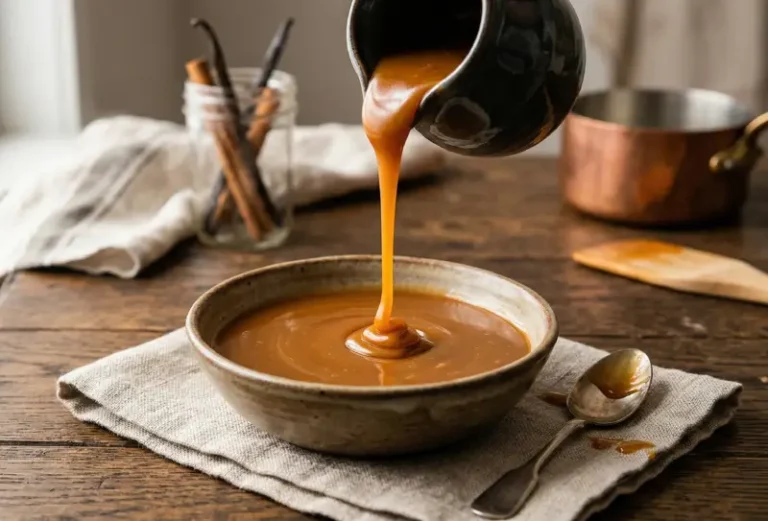
In culinary science, thickening is more than just making a liquid viscous; it is the process of Starch Gelatinization. When starch granules are heated in a liquid, they swell and burst, releasing starch chains that trap water molecules in a semi-solid network.
However, not all starches are created equal. The ratio of amylose (straight chains) to amylopectin (branched chains) determines whether your sauce will be cloudy or clear, stable or weeping, and creamy or stringy.
Cornstarch: The Industrial Standard
Cornstarch is a grain-based starch high in amylose. It is the most common thickener in Western kitchens due to its powerful structural strength.
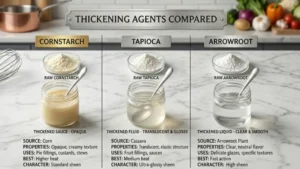
- Molecular Behavior: Because it is high in amylose, it forms a rigid, opaque gel as it cools. This makes it ideal for fillings that need to hold their shape, like lemon curd or pie fillings.
- Visual Properties: It produces a “matte” or cloudy finish. It is not suitable for clear fruit glazes where transparency is desired.
- The “Cereal” Flaw: Cornstarch must be cooked to a boil to remove the “raw” starchy taste and to fully reach its thickening potential. However, extended boiling or intense whisking can break the starch chains, causing the sauce to thin out again.
Tapioca Starch: The Elastic Hybrid
Derived from the Cassava, tapioca is a tuber starch known for its high amylopectin content and unique physical “stretch.”
- Molecular Behavior: High amylopectin levels mean tapioca creates a very “long” and elastic texture. If over-mixed, it can become stringy or “mucilaginous.”
- Visual Properties: It produces a high-gloss, nearly transparent finish. It is the preferred choice for bright berry pies where you want the fruit’s color to shine.
- Temperature Sensitivity: Tapioca thickens at a lower temperature than cornstarch and stays stable even if frozen. This makes it a primary tool for managing Retrogradation in frozen prepared foods.
Arrowroot: The Cleanest Finish
Arrowroot is another tuber-based starch, often preferred in high-end pastry and acidic sauces.
- Molecular Behavior: Arrowroot has a very fine grain size, resulting in the smoothest mouthfeel of the three. Unlike cornstarch, its thickening power is not weakened by acidic ingredients like lemon juice or vinegar.
- Visual Properties: It creates an absolutely shimmering, crystal-clear glaze. It is often used in “mirror glazes” for cakes.
- The Dairy Exception: Arrowroot does not play well with dairy. When mixed with milk or cream, it can turn unpleasantly slimy due to a reaction with the dairy proteins.
Technical Performance Breakdown
To choose the right thickener, you must match the starch’s chemistry to your specific recipe needs.
Cornstarch is your “structural” engine. Use it for savory gravies, puddings, and any dish where a sturdy, opaque result is acceptable. Avoid using it in dishes intended for the freezer, as the high amylose content leads to heavy weeping during the thaw.
Tapioca is your “flexibility” engine. It is perfect for fruit fillings and gluten-free baking. Because it survives the freeze-thaw cycle without breaking, it is superior for “make-ahead” meals. For more on this, see Alternative Flours (Cassava, Chickpea, Rice).
Arrowroot is your “precision” engine. Use it for clear sauces, acidic fruit glazes, and any dish where you want the cleanest possible flavor profile. Just remember to keep it away from the milk jug.
Managing the Slurry
Regardless of the starch type, they all share a common physical requirement: the slurry.
Starches are hydrophobic in cold water; they don’t dissolve, they just hang in suspension. You must always mix the starch with a small amount of cold liquid before adding it to a hot pot. If you add dry starch directly to heat, the outside of the clumps will gelatinize instantly, creating “starch balls” with dry powder trapped inside that can never be smoothed out.
Conclusion
Choosing between cornstarch, tapioca, and arrowroot is an exercise in managing Texture. By understanding how these molecules respond to heat, acid, and dairy, you can ensure your sauces are always the perfect consistency.
Related article: How Carbohydrates Actually Build the Food We Love