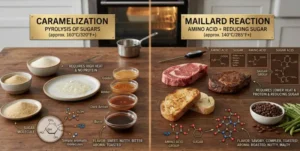
In the world of food science, “browning” is the ultimate signal of flavor. Whether it’s the golden crust of a baguette or the deep amber of a caramel sauce, these colors are created by two distinct chemical processes: Caramelization and the Maillard Reaction.
While both involve carbohydrates and heat, they are fundamentally different transformations that produce vastly different aromas and tastes. Understanding How Carbohydrates Actually Build the Food We Love is the first step to mastering these techniques.
Caramelization: The Sugar-Only Party
Caramelization is the oxidation of sugar. It is a “pyrolytic” process, meaning it involves the breakdown of molecules through high heat alone—no proteins required.
How it Works
When you heat sugar (sucrose) to high temperatures—usually above 160°C (320°F)— the molecules begin to vibrate so violently that they break apart. They then recombine into hundreds of new compounds.
- Phase 1: Melting. The sugar crystals turn into a clear liquid.
- Phase 2: Foaming. As the sugar molecules break down, they release water vapor.
- Phase 3: Color and Flavor Development. The sugar turns golden, then brown, and eventually dark amber. To avoid burning your mixture, read Caramel Sauce Temperature Guide.
The Flavor Profile
Caramelization produces a profile that is sweet, nutty, and slightly bitter. It creates aromas often described as “buttery” or “toasty”.
Related article: The Science of Sugar: From Glucose to Caramelization
The Maillard Reaction: The Protein Collaboration
Named after French chemist Louis-Camille Maillard, this reaction is a chemical dance between reducing sugars and amino acids (the building blocks of proteins).
How it Works
Unlike caramelization, the Maillard reaction can occur at lower temperatures, though it accelerates rapidly above 140°C (285°F).
- The Interaction: A sugar molecule reacts with an amino acid to form an unstable intermediate compound.
- The Cascade: This compound undergoes a series of complex rearrangements, eventually producing hundreds of different flavor and aroma molecules.
- The Result: The creation of melanoidins, which are the brown pigments responsible for the color of toasted bread and seared meat.
The Flavor Profile
The Maillard reaction is responsible for savory, “meaty,” and “roasty” flavors. It is why a seared steak tastes fundamentally different from a boiled one.
Key Differences at a Glance
- Ingredients: Caramelization requires only sugar; Maillard requires both sugar and protein.
- Temperature: Caramelization generally requires much higher heat (starting around 160°C) than Maillard (starting around 140°C).
- Flavor Output: Caramelization yields sweet/nutty notes; Maillard yields savory/umami notes.
Culinary Applications
Examples of Caramelization:
- Crème Brûlée: The torching of the sugar topping.
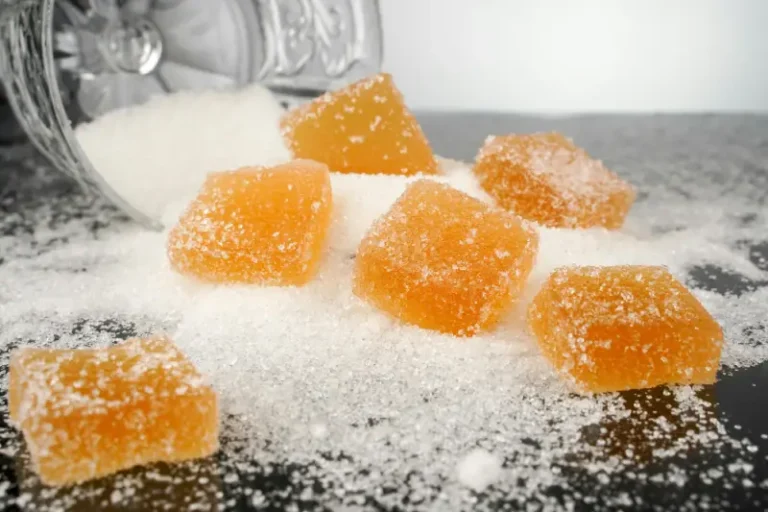
- Caramel Sauce: Melting granulated sugar until it browns.
- Roasted Onions: Onions have a high enough sugar content to caramelize significantly over time.
Examples of the Maillard Reaction:
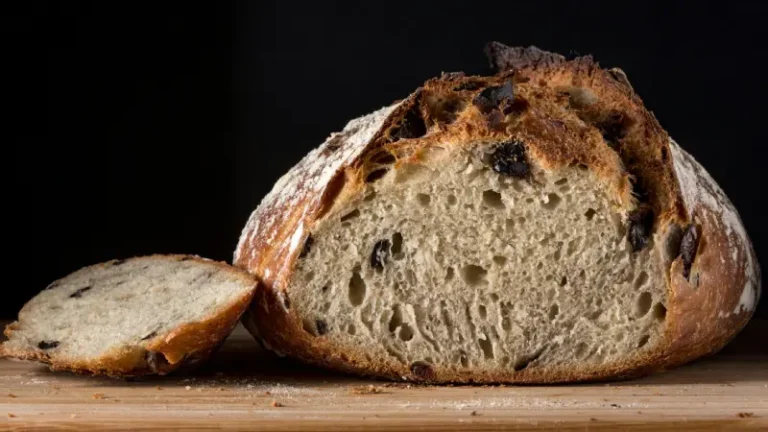
- Baking Bread: The golden-brown crust of a loaf.
- Roasting Coffee: The transformation of green beans into aromatic brown beans.
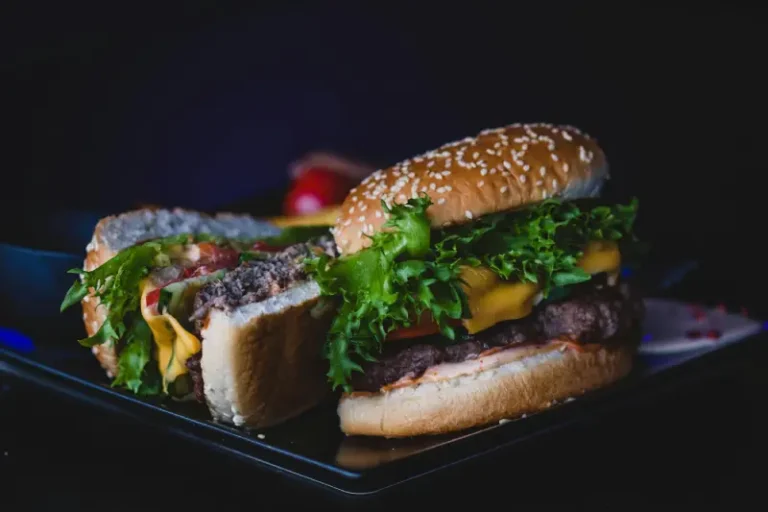
- Searing Meat: The savory crust on a steak or burger.
Pro Tip: In many dishes, both reactions happen at once. For example, when roasting carrots, the sugars caramelize while the sugars and proteins in the vegetable undergo the Maillard reaction, creating a complex, multi-layered flavor profile.
Understanding the difference between these two reactions is the key to mastering “The Science of Browning”. By controlling your heat and knowing your ingredients, you can decide whether you want the sweet complexity of caramelization or the savory depth of the Maillard reaction.