Table of Contents
A Step-by-Step Global Guide to Perfect Steamed Rice Dumplings
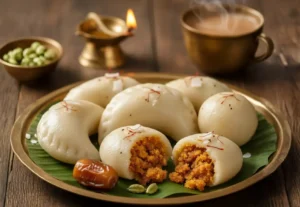
Pooranam Kozhukattai or Modak is more than a traditional Indian sweet—it’s a celebration of memory, culture, and comfort. Popularly prepared during Ganesh Chaturthi, these delicate steamed dumplings are known for their soft rice covering and rich coconut-jaggery filling.
Yet many home cooks face the same problem: the outer shell turns dry, hard, or rubbery after steaming.
Today, we’re sharing a simple but transformative secret that guarantees extra-soft, white, and tender Kozhukattai for hours—using milk in the dough. This small adjustment elevates the texture without compromising authenticity, making the recipe beginner-friendly and perfect for cooks anywhere in the world.
What Is Pooranam Kozhukattai? (For Global Readers)
- Pooranam Kozhukattai (Tamil) → Steamed rice dumplings with sweet coconut filling
- Modak (Hindi / Marathi) → Steamed rice dumplings traditionally offered to Lord Ganesha
These dumplings are naturally oil-free, and gently steamed, making them both festive and wholesome.
Why You’ll Love This Recipe
- Extra-Soft Texture: Milk keeps the dough pliable and prevents drying
- Perfectly Balanced Sweetness: Coconut and jaggery with fragrant cardamom
- Healthy & Steamed: No frying, no refined sugar
- Globally Accessible: Clear substitutions and measurement conversions
Ingredients You’ll Need
Outer Dough (Rice Covering)
- Rice flour – 1 cup (lightly roasted)
- Milk – 1 cup (240 ml)
- Water – ¾ cup (180 ml)
- Ghee (clarified butter) – 1 teaspoon
- Salt – a pinch
Ingredient Translation:
- Ghee = clarified butter
- Rice flour should be fine-textured (not coarse)
Sweet Filling (Pooranam)
- Fresh grated coconut – 1 cup
- Jaggery (unrefined cane sugar) – ¾ cup, powdered
- Cardamom powder – ½ teaspoon
- Ghee – 2 teaspoons
Global Substitutes:
- Jaggery → Panela / Palm sugar / Dark brown sugar
- Fresh coconut → Unsweetened desiccated coconut (rehydrated)
Step-by-Step Instructions
Step 1: Prepare the Extra-Soft Dough
This step defines the final texture of your Kozhukattai.
- In a wide pan, combine milk and water.
- Bring to a gentle boil over medium heat.
- Add 1 teaspoon ghee and a pinch of salt.
- Lower the heat and slowly add roasted rice flour, stirring continuously.
- Stir until the mixture thickens and forms a soft dough.
- Switch off the heat, cover for 1 minute.
- While still warm, knead gently until smooth and crack-free.
The dough should feel soft, warm, and elastic.
Step 2: Make the Sweet Coconut Filling (Pooranam)
- Heat 2 teaspoons ghee in a pan.
- Add grated coconut and sauté for 1 minute until aromatic.
- Add jaggery and cardamom powder.
- Stir continuously until jaggery melts and binds with coconut.
- Cook until the mixture thickens and leaves the pan sides.
- Remove from heat and let it cool completely.
The filling should be moist but not watery.
Step 3: Shape the Dumplings
- Lightly grease your palms with ghee.
- Take a lemon-sized portion of dough.
- Flatten it into a thin disc using parchment paper, plastic wrap, or banana leaf.
- Place 1–2 teaspoons of filling in the center.
- Fold and seal to form a half-moon shape (traditional South Indian style).
Seal carefully to avoid cracks.
Step 4: Steam to Perfection
- Arrange the dumplings in a steamer or steaming basket.
- Steam over medium heat for 10 minutes.
- They are ready when the outer layer looks shiny and slightly translucent.
Let them rest for 2 minutes before removing.
Pro Tips for Guaranteed Soft Kozhukattai
- Roast rice flour for 60 seconds to remove moisture
- Keep unused dough covered with a damp cloth
- Do not oversteam—this causes hardness
- Use good-quality jaggery for flavor and color
Serving Tips
- Serve warm for the softest texture
- Traditionally offered during Ganesh Chaturthi
- Enjoy with:
- South Indian filter coffee
- Herbal or ginger tea
- As a light dessert after meals
Storage Tip:
Best eaten fresh. Refrigerate up to 24 hours and re-steam lightly before serving.
This Pooranam Kozhukattai recipe proves that tradition can evolve gently. The addition of milk keeps the dumplings tender, white, and soft—without losing their cultural essence.
Once you try this method, it will become your forever recipe.