Table of Contents
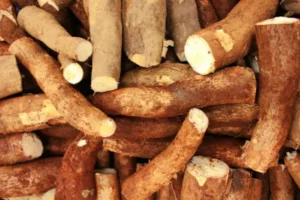
Across the tropical belts of Africa, South America, and Southeast Asia, cassava (also known as yuca or manioc) is a vital carbohydrate anchor. While wheat and rice often dominate global conversations, cassava provides more calories per acre than almost any other crop, thriving in poor soils where other plants fail.+1
However, the biological reality of cassava is complex: it is a plant that must be “tamed” through food science. Many varieties are naturally toxic, requiring sophisticated processing techniques—often involving fermentation—to make them safe and nutritious.
The Survivalist Starch: Biological Resilience
Cassava (Manihot esculenta) is a tuberous root with a unique carbohydrate profile. Unlike grains, which grow above ground and are susceptible to weather, cassava grows underground, protected from pests and drought.
- Pure Starch Reserve: Cassava is almost entirely starch, with very little protein or fat. This makes it an incredibly efficient energy source, though it must be balanced with other nutrient-dense foods.
- Cyanogenic Glycosides: The plant’s defense mechanism involves producing cyanide-releasing compounds. “Sweet” cassava has low levels and can be eaten after simple cooking, but “bitter” cassava contains high concentrations that are lethal if not processed correctly.
- Post-Harvest Physiology: Once harvested, cassava deteriorates rapidly due to oxidation. To store it, tropical cultures have developed drying and fermentation methods that convert the perishables into shelf-stable flours and granules.+1
The Science of Detoxification: Fermentation and Grating
Indigenous and tropical food systems utilize a multi-step process to remove toxins and enhance the flavor of cassava. This is a primary example of Fermentation and Carbohydrates working in tandem to ensure food safety.
- Mechanical Disruption: Grating or crushing the roots breaks open the plant cells, bringing the toxic glycosides into contact with the plant’s own enzymes (linamarase). This triggers the release of hydrogen cyanide gas, which escapes into the air.
- Lactic Acid Fermentation: The grated pulp is often submerged in water or hung in sacks to ferment for several days. Lactic Acid Bacteria (LAB) lower the pH, further breaking down toxins and creating a characteristic sour flavor similar to the “tang” in Sourdough.
- Drying and Heat: Final drying or roasting (as seen in Brazilian farinha or West African gari) uses heat to drive off any remaining volatile cyanide.
Structural Properties: High Amylopectin and Elasticity
Cassava starch (tapioca) is unique because of its high amylopectin content. This gives cassava products a distinct “stretch” and “chew” that is highly valued in tropical cuisines.+1
- The Gelatinization Edge: Cassava starch gelatinizes at a lower temperature than corn or wheat starch. For a technical deep dive into this process, see Starch Gelatinization Explained.
- Elasticity in Doughs: This high-amylopectin profile is responsible for the stretchy, dough-like consistency of foods like West African Fufu or Southeast Asian boba pearls.
- Retrogradation Resistance: Unlike wheat bread, cassava-based gels resist “staling” or hardening. This is because the starch molecules don’t recrystallize as quickly. For more on this, see Retrogradation: Why Bread Goes Stale.
Iconic Tropical Preparations
Cassava is a versatile material that can be transformed into various textures based on how its starches are manipulated.
- Fufu and Pounded Yam: In Central and West Africa, fermented and boiled cassava is pounded into a smooth, elastic dough. The pounding aligns the gelatinized starch chains, creating a structure that can be swallowed without chewing.
- Gari: In West Africa, cassava is fermented, dried, and then roasted. The roasting process “pre-cooks” the starch, allowing it to swell instantly when water is added.
- Tapioca and Farofa: In South America, the starch is extracted to make translucent pearls or roasted into a crunchy meal (farofa) that provides a textural contrast to stews.
Nutritional Fortification and the Future
Because cassava is low in protein and micronutrients, modern food science is looking toward Indigenous methods to improve it.
- Biofortification: Scientists are developing “Yellow Cassava” varieties high in Vitamin A, mirroring the carotenoid benefits found in Corn.
- Fermentation for Protein: Some fermentation processes involve fungi that can actually increase the protein content of the final cassava product.
- Gluten-Free Flour: Cassava flour is becoming a global favorite for gluten-free baking because its starch profile mimics the “chew” of gluten better than rice or potato starch.
Cassava is a testament to human ingenuity. By using fermentation and mechanical processing to turn a toxic root into a global staple, tropical cultures have mastered a complex form of food science. It remains a “climate-smart” crop that will only become more important as global temperatures rise.
Related article: How Carbohydrates Actually Build the Food We Love