Table of Contents
Sourdough bread is often celebrated for its complex flavor and chewy texture, but at its heart, it is a living biological system. Unlike commercial bread that relies on a single strain of manufactured yeast, sourdough is the product of a Symbiotic Culture of Bacteria and Yeast (SCOBY).
When you bake a loaf of sourdough, you aren’t just following a recipe—you are managing a tiny ecosystem of microbes that transform flour and water into a masterpiece of carbohydrate chemistry.
What is a Sourdough Starter?
A sourdough starter, or “levain,” is a fermented mixture of flour and water that houses wild yeast and Lactic Acid Bacteria (LAB). These microbes are naturally present on grain husks and in the air.
- Wild Yeast: Primarily responsible for “leavening” (rising). It consumes the sugars in the flour and exhales Carbon Dioxide (CO2).
- Lactic Acid Bacteria: These are the “flavor makers.” They produce organic acids (lactic and acetic acid) that give sourdough its signature tang and improve its shelf life.
The Fermentation Process
Fermentation in sourdough is a two-part harmony that happens simultaneously within the dough.
Step 1: Breaking Down the Starch
Before the microbes can eat, the complex starches in the flour must be broken down. Enzymes called amylases (found naturally in the flour) act like tiny scissors, chopping long starch chains into simple sugars like maltose and glucose.
Step 2: The Microbial Feast (Bulk Fermentation)
Once the sugars are available, the microbes go to work:
- The Rise: The yeast consumes the glucose and converts it into CO2 gas and ethanol. These gas bubbles get trapped inside the Bread Structure, stretching the gluten and making the dough expand.
- The Tang: The bacteria consume the same sugars but produce lactic and acetic acids. This acidity doesn’t just add flavor; it also strengthens the gluten network, making the dough more elastic.
Why Time and Temperature Matter
Because fermentation is a biological process, it is highly sensitive to the environment.
- Warm Fermentation: Speeds up the yeast. The bread rises faster, but the bacteria don’t have enough time to produce deep flavors.
- Cold Fermentation (The “Cold Proof”): Many bakers put their dough in the fridge overnight. Yeast slows down significantly in the cold, but the bacteria keep working (at a slower pace). This long, slow process allows for a more complex, sour flavor and helps prevent Retrogradation.
The Structural Payoff: Crumb and Crust
The fermentation period directly dictates the final look and feel of your loaf.
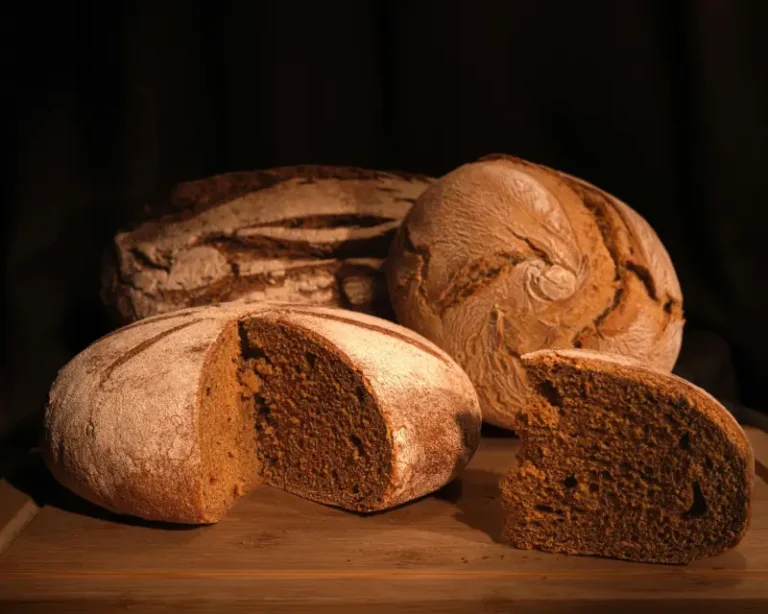
- The Crumb: A long fermentation allows the CO2 bubbles to expand fully, creating the “open crumb” (large holes) seen in artisanal loaves. This is heavily influenced by your Hydration Ratios.
- The Crust: During baking, the residual sugars and amino acids produced during fermentation undergo the Maillard Reaction, creating a dark, flavorful, and crunchy crust.
Nutritional Benefits of Sourdough
The fermentation process “pre-digests” the bread for you, offering several health advantages:
- Lower Glycemic Index: The acids produced by the bacteria slow down the rate at which your body absorbs the carbohydrates, leading to a more stable blood sugar level.
- Gluten Breakdown: While not gluten-free, the long fermentation process helps break down some of the gluten proteins, making it easier for many people with sensitivities to digest.
- Mineral Availability: Fermentation breaks down phytic acid, a compound in grains that usually blocks the absorption of minerals like iron and zinc.
Sourdough is a perfect intersection of biology and culinary art. By understanding that you are feeding a living culture, you can manipulate time, temperature, and flour types to create a loaf that is uniquely yours.
Related article: How Carbohydrates Actually Build the Food We Love