Table of Contents
Making a perfect caramel sauce is a rite of passage for any home cook. While the ingredient list is short—usually just sugar, water, butter, and cream—the success of the sauce depends entirely on your mastery of heat.
In this guide, we’ll explore the specific temperatures that transform white granules into a velvety, amber sauce, and how to avoid the common pitfalls of the candy thermometer.
The Starting Point: Wet vs. Dry Caramel
Before you even look at the thermometer, you must choose your method:
- Dry Caramel: Heating sugar alone until it melts and browns. This is faster but requires constant attention to prevent burning.
- Wet Caramel: Dissolving sugar in a bit of water first. This method is slower and more controlled, making it ideal for beginners.
The Critical Temperature Stages
When making caramel sauce, you are essentially moving through various stages (read article: Cooking Temperatures and Sugar Stages) until you reach the point of breakdown.
The Concentration Phase (100°C – 150°C)
As the sugar and water boil, the water evaporates. During this phase, the syrup remains clear. You are moving through the Thread, Ball, and Crack stages. While these are vital for candies, for a sauce, this is simply the “waiting room”.
The Caramelization Zone (160°C – 175°C)
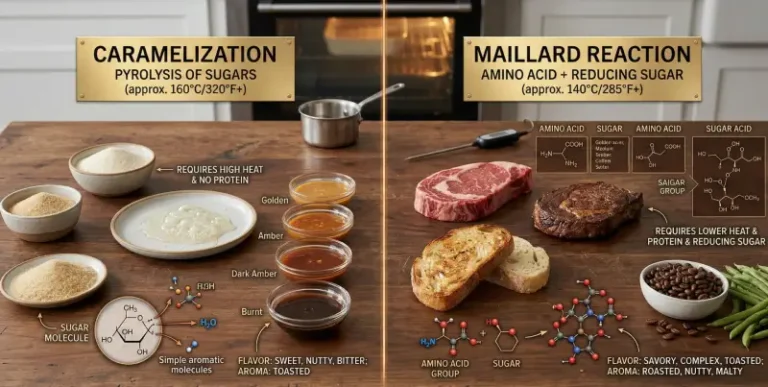
This is where the magic happens. The sugar molecules begin to break apart and reform into new, flavorful compounds.
- 160°C (Light Gold): The flavor is sweet and mild. This is great for delicate desserts where you don’t want the caramel to overpower other flavors.
- 170°C (Amber): This is the classic “caramel” stage. It has a balanced profile of sweetness and a hint of toasted nuttiness.
- 175°C (Dark Amber): The sugar is on the edge of bitterness. This stage produces the most complex, professional-tasting sauce with a deep, sophisticated “burnt sugar” note.
The Danger Zone (Above 177°C)
If your thermometer hits 180°C, the sugar has moved past delicious and into “burnt” territory. The sauce will be black, acrid, and smell like smoke. At this point, it is best to start over.
Stopping the Reaction: “Deglazing”
Once the sugar reaches your desired color and temperature, you must stop the cooking immediately by adding room-temperature or warmed butter and cream.
Pro Tip: Be extremely careful during this step! Adding liquid to 170°C sugar will cause it to steam and bubble up violently. Use a tall heavy-bottomed pot to prevent the sauce from boiling over the sides.
Troubleshooting Temperature Issues
- Grainy Sauce: This is caused by crystallization. If a single sugar crystal remains on the side of the pot, it can turn your smooth sauce back into sand. Use a wet pastry brush to wash down the sides of the pan as the syrup boils.
- Too Thin: If your sauce is watery once cooled, you likely added too much cream or didn’t let the sugar cook long enough to reach a higher concentration stage before deglazing.
- Too Hard: If the sauce turns into a solid brick in the fridge, you likely pushed the sugar into the “Hard Crack” stage (150°C+) for too long before adding your fats.
A caramel sauce is only as good as the precision of the cook. By watching your temperatures—and your colors—you can create a sauce that ranges from light and sweet to dark and complex.
Related article: How Carbohydrates Actually Build the Food We Love