Table of Contents
In the world of carbohydrates, grains are the heavy hitters. They provide the bulk of the world’s calories and serve as the foundation for countless culinary traditions. However, from a food science perspective, not all grains are created equal. The difference between a “whole” grain and a “refined” grain comes down to a simple matter of anatomy and processing.
Understanding this distinction is the key to mastering both your health and your cooking technique.
The Anatomy of a Grain
To understand the difference, we have to look at the three distinct parts of a grain kernel:
- The Bran: The multi-layered outer skin of the edible kernel. It contains important antioxidants, B vitamins, and—most importantly—fiber.
- The Germ: The embryo which has the potential to sprout into a new plant. It is packed with B vitamins, some protein, minerals, and healthy fats.
- The Endosperm: The germ’s food supply, which provides essential energy to the young plant so it can send roots down for water and nutrients. This is the largest portion of the kernel and contains mostly starchy carbohydrates and some protein.
Whole Grains: The Complete Package
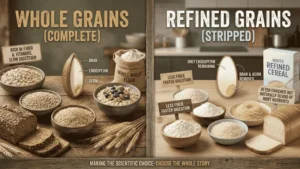
A whole grain contains all three parts of the kernel. Whether it is ground into flour or eaten intact, the ratio of bran, germ, and endosperm remains the same as it was in nature.
Culinary Characteristics
- Flavor: Whole grains often have a nuttier, more robust, and earthy flavor.
- Texture: They provide more “tooth” and chewiness due to the fibrous bran.
- Hydration: Because of the high fiber content, whole grain flours absorb more water than refined flours. This is a critical factor when calculating Hydration Ratios in Dough.
Refined Grains: The Stripped Down Version
Refining is the process of removing the bran and the germ, leaving only the starchy endosperm. This is typically done to give the grain a finer texture and to extend its shelf life, since the fats in the germ can spoil over time.
Culinary Characteristics
- Texture: Refined grains produce a much softer, more delicate “crumb” in baking.
- Color: They are typically white or very pale.
- Versatility: Without the strong flavors of the bran and germ, refined grains are a “blank canvas,” allowing other ingredients to shine.
The Science of Processing
The most common refined grain is white flour. While it is excellent for light pastries and fluffy bread, the refining process removes about 25% of the grain’s protein and a vast majority of its fiber and nutrients.
Enrichment
Because so many nutrients are lost during refining, many manufacturers “enrich” the grains afterward, adding back B vitamins and iron. However, fiber is almost never added back, which is why whole grains remain superior for gut health.
Whole Grains vs. Refined Grains in the Kitchen
When to choose Whole Grains:
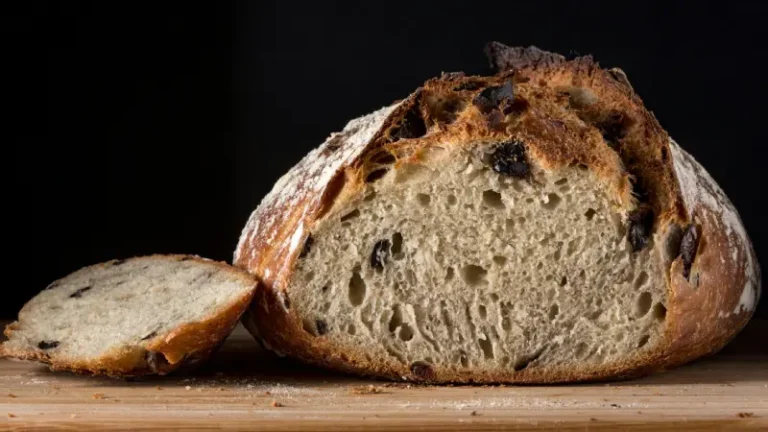
- Hearty Breads: Use whole wheat or rye for structure and deep flavor.
- Grain Bowls: Use intact grains like farro, quinoa, or brown rice for a satisfying, chewy base.
- Nutritional Boost: When you want to maximize the metabolic health. For more insights, refer article: Resistant Starch and Cooling Grains.
When to choose Refined Grains:
- Delicate Pastries: Cakes, biscuits, and pie crusts rely on the fine texture of refined flour.
- Smooth Sauces: Refined starches provide a silkier finish without the grit of bran.
- Quick Energy: In some culinary contexts, the fast-digesting nature of refined carbs is preferred for immediate energy.
Conclusion
In modern food science, the goal isn’t necessarily to eliminate refined grains, but to understand when to use them. While refined grains offer specific textural advantages in the kitchen, whole grains provide the structural and nutritional complexity that defines a healthy, flavor-forward diet.
Related articles: