Table of Contents
Vegetable Kurma is a cornerstone of South Indian cuisine, beloved for its aromatic spices, creamy texture, and versatile nature. This recipe guides us through a classic preparation that balances the crunch of fresh vegetables with a rich, coconut-based gravy. This dish is not just a side; it is a celebration of seasonal produce and traditional spice-blending techniques.
Ingredients and Measurements
To achieve the authentic taste of this Kurma, the ingredients are divided into the vegetable base and the flavorful ground paste.
Vegetables:
- Carrots: 100g (finely chopped)
- Beans: 100g (chopped)
- Potatoes: 100g (peeled and cubed)
- Onions: 100g (finely sliced)
- Tomatoes: 2 medium-sized (chopped)
Spices and Seasoning:
- Ginger-Garlic Paste: 2 teaspoons
- Turmeric Powder: ½ teaspoon
- Chilli Powder: 2 teaspoons (adjust to heat preference)
- Coriander Powder: 1 teaspoon
- Fennel Seeds (Soma): 1 teaspoon
- Oil: 3 tablespoons (for sautéing)
- Salt: To taste
- Curry Leaves: A handful for tempering
For the Ground Coconut Paste:
- Grated Coconut: 1 cup
- Poppy Seeds (Optional): To add extra thickness.
Preparation Method
1. Tempering and Sautéing Aromatics
The process begins by heating oil in a large pan or kadai. Once the oil is hot, fennel seeds are added to release their sweet, anise-like aroma. Following this, curry leaves and sliced onions are sautéed until the onions turn translucent. The addition of ginger-garlic paste at this stage is crucial, as it must be cooked until the raw smell disappears.
2. Building the Flavor Base
Next, the chopped tomatoes are added and cooked until they soften and blend with the onions. The dry spices—turmeric, chilli powder, and coriander powder—are then incorporated. It is essential to sauté these spices on low heat to prevent burning while allowing their natural oils to infuse the base.
3. Cooking the Vegetables
The stars of the dish—carrots, beans, and potatoes—are added to the spice mix. The vegetables are tossed well to ensure they are thoroughly coated in the masala. Water is added to the pan, and the mixture is covered and simmered until the potatoes are fork-tender.
4. The Signature Coconut Finish
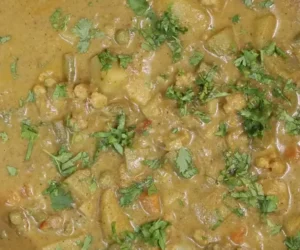
The defining characteristic of a South Indian Kurma is the coconut paste. Freshly grated coconut is ground into a smooth, fine paste with a little water. This paste is stirred into the simmering vegetables. The coconut not only thickens the gravy but also mellows the heat of the chilli powder, creating a velvety consistency.
5. Final Simmer
The Kurma is allowed to simmer for a final 2 to 3 minutes. This ensures that the flavors of the coconut and spices are fully integrated into the vegetables. Once the gravy reaches the desired thickness and the oil starts to slightly separate, the dish is ready.
Conclusion
This Vegetable Kurma is a testament to the balance of flavors in Indian cooking—spicy, savory, and subtly sweet from the coconut. It serves as an excellent accompaniment to Parotta, Appam, Idiyappam, or even simple steamed rice. By following these precise measurements and techniques, one can recreate this restaurant-quality dish in the comfort of a home kitchen.