Table of Contents
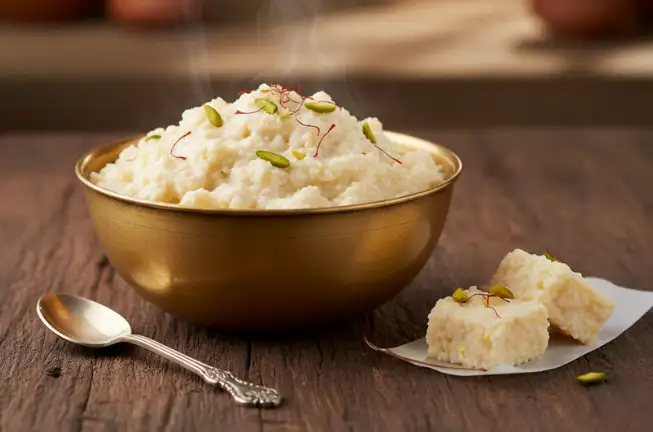
Authentic Srivilliputhur Palkova
Most people think Indian sweets require complex syrups and thickeners. But in a small town in Tamil Nadu, they’ve been making "White Gold" for a century using absolutely nothing but milk and sugar.So, why can’t most people recreate that signature "grainy" texture at home? The answer isn't in a hidden ingredient—it’s in a repetitive motion that most modern cooks skip. Today, I’m showing you the exact process used in Srivilliputhur to turn 1.5 liters of milk into a rich, caramelized masterpiece.
Ingredients
- 1500 ml Full Cream Milk Full-fat milk is essential for the grainy texture
- 150 g Sugar Adjust to your preferred sweetness
Instructions
- Pour the 1.5 liters of full cream milk into a thick-bottomed kadai or a heavy non-stick pan. Bring it to a boil over medium-high heat.
- Once the milk boils, reduce the heat to medium. Begin stirring constantly. As the milk simmers, cream (malai) will form on the surface and the sides of the pan.
- Continue cooking until the milk reduces to approximately 1/4th of its original volume. The milk will thicken significantly and turn a pale cream color. Stir continuously during this stage to prevent the solids from scorching at the bottom.
- When the milk reaches a thick, semi-solid "khoya" consistency, add the sugar. The mixture will temporarily become watery again as the sugar melts.
- Keep stirring until the extra moisture evaporates and the mixture starts to leave the sides of the pan. It should be thick, moist, and slightly lumpy.
- Remove from heat and let it cool. The Palkova will firm up slightly as it reaches room temperature, achieving its perfect traditional texture.
Key Step: Regularly scrape these creamy bits back into the boiling milk. This repetitive scraping is what creates the famous grainy consistency of Srivilliputhur Palkova.
Do not overcook it until it's bone-dry; it should remain soft to the touch.
Notes
- Equipment: A heavy-bottomed kadai is non-negotiable here to prevent burning, which would ruin the delicate milk flavor.
- Storage: Store in an airtight container. It stays fresh for 2–3 days at room temperature or up to a week in the refrigerator.
Patience is Key: Authentic Palkova does not use lemon juice or vinegar to curdle the milk. The “grains” are formed purely by the constant scraping of the milk solids.